

Amusement Park and Boardwalk Injuries at the Jersey Shore
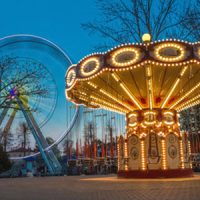
A day spent enjoying amusement rides, carnival games, and ocean views is often a highlight of a trip to the Jersey Shore. But when a ride malfunctions, a safety restraint fails, or a dangerous condition causes someone to fall, that excitement can turn into a medical emergency. Instead of heading home with happy memories, you may be facing a hospital visit, painful injuries, and difficult questions about what went wrong.
At Atlantic City amusement piers and other boardwalk attractions along the coast, people trust that rides are properly maintained and employees follow appropriate safety procedures. When negligence causes a serious accident, the consequences can disrupt work, family responsibilities, and everyday life long after the visit ends. Consulting with an experienced Atlantic City amusement park accident lawyer can help identify the parties whose actions or negligence may have contributed to a serious ride or boardwalk accident.
How Amusement Park and Boardwalk Accidents Happen
Amusement parks bring together moving machinery, elevated platforms, crowded walkways, and attractions designed to deliver excitement. When equipment is neglected or employees overlook safety precautions, even familiar rides can become dangerous.
Roller coasters, Ferris wheels, spinning attractions, and other mechanical rides depend on systems that must operate reliably throughout the day. Worn components, malfunctioning brakes, defective restraints, or damaged supports can cause sudden stops, collisions, and falls. Once a ride begins moving, passengers have little ability to protect themselves if something goes wrong.
Improper operation presents additional dangers. Starting an attraction before passengers are securely seated, overlooking height restrictions, or failing to respond to a developing problem can put people at unnecessary risk. Children are particularly vulnerable when an attraction is unsuitable for their size or a safety restraint is not properly secured.
Away from the rides, loose boardwalk planks, uneven surfaces, damaged stairways, and poorly maintained railings can cause serious falls. Rain, spilled beverages, and crowded pedestrian areas may make these hazards difficult to recognize, especially after dark. A fall near an attraction can be just as devastating as an accident involving moving equipment.
New Jersey Safety Requirements for Amusement Rides
Before boarding an amusement ride, most people assume the attraction has been inspected and that its operators understand the necessary safety precautions. New Jersey has established requirements intended to protect passengers and reduce the risk of preventable accidents.
Under the Carnival-Amusement Rides Safety Act, N.J.S.A. 5:3-31 et seq., the New Jersey Department of Community Affairs oversees covered amusement rides through operating permits, inspections, and safety regulations. The accompanying rules under N.J.A.C. 5:14A establish requirements for equipment maintenance, operation, and passenger protection.
Under N.J.A.C. 5:14A-9.8, ride operators are subject to requirements involving passenger supervision, safety restraints, and applicable rider restrictions. Properly checking restraints and following operating procedures are especially important when children are riding, since they may not recognize when equipment is improperly secured or unsuitable for them.
New Jersey also prohibits the knowing operation of improperly assembled, defective, or unsafe amusement rides under N.J.A.C. 5:14A-9.6, while N.J.A.C. 5:14A-9.25 addresses ride operation during dangerous wind and weather conditions. An attraction’s operating permit does not excuse safety problems that develop after an inspection.
These safeguards depend on consistent compliance. When equipment problems are overlooked or established procedures are disregarded, passengers can suffer injuries that reasonable precautions may have prevented.
Liability for Amusement Park and Boardwalk Accidents
An accident in an amusement park may involve several businesses, each with different obligations. Although an entertainment venue may appear to operate as a single business, responsibility for the property, individual attractions, equipment, and maintenance can be divided among separate companies.
Amusement park owners and operators may face liability when negligence within their responsibilities causes harm. Their obligations can include maintaining reasonably safe premises, supervising employees, and exercising appropriate care in operating attractions.
In Nisivoccia v. Glass Gardens, Inc., the New Jersey Supreme Court addressed a business owner’s duty to protect customers from dangerous property conditions. Generally, premises liability claims involving hazardous conditions require proof that a business knew or reasonably should have known about the danger, although limited exceptions may apply.
Along a boardwalk, responsibility may depend on who owned, occupied, or controlled the area where an accident occurred. When equipment defects are involved, liability may also extend to manufacturers or sellers under the New Jersey Products Liability Act, N.J.S.A. 2A:58C-2, which addresses qualifying manufacturing defects, defective designs, and inadequate warnings or instructions.
Outside maintenance contractors may also face negligence claims when careless servicing or repairs contribute to an accident. Depending on how an attraction is owned, operated, and maintained, more than one party may be legally responsible for the resulting harm.
The Physical and Financial Impact of Serious Amusement Park Injuries
Recovering from a serious amusement park accident can be difficult when an ordinary outing ends with an unexpected hospital stay. Traumatic brain injuries, spinal cord damage, fractures, internal injuries, and severe soft tissue damage may require surgery, rehabilitation, or continuing medical treatment. Some injuries heal with time, while others leave permanent limitations affecting mobility and independence.
When a child is seriously hurt, the effects can reach across the household. Parents may miss work to attend medical appointments or arrange specialized care, while school absences and physical restrictions interrupt familiar routines. Adults recovering from serious injuries may also struggle to return to work or manage everyday responsibilities.
As treatment continues, medical expenses and lost income can place significant pressure on a household. Additional procedures, rehabilitation, and future care needs may create financial concerns that persist long after the initial accident.
Through a New Jersey personal injury claim, compensation may be available for past and future medical expenses, lost income, diminished earning capacity, pain and suffering, and other legally recoverable losses. Although financial recovery cannot undo the experience, it can help address the lasting burdens of a preventable accident.
Evidence Following an Amusement Park or Boardwalk Accident
After an amusement park accident, the cause may not be immediately clear. Witnesses might remember different details, employees may provide conflicting explanations, and the condition of the equipment or surrounding area can change before all the facts are established.
Photographs, witness statements, medical records, incident reports, and available surveillance footage can help document what happened. For accidents involving amusement rides, maintenance histories, operating records, employee training documentation, and inspection reports may provide additional information about the attraction’s condition and operation.
Because many boardwalk attractions operate seasonally, delays can make important information harder to obtain. Equipment may be repaired or removed, recordings may be overwritten, and witnesses may return home before their accounts are documented.
An amusement park or insurance company may also dispute the circumstances or offer an explanation that differs from what passengers experienced. Preserving available evidence can help establish what happened before important details disappear, particularly when hospitalization or ongoing treatment makes immediate documentation difficult.
Time Limits for New Jersey Amusement Park Injury Claims
Following a serious accident, medical care and recovery understandably take priority. However, New Jersey has filing and reporting deadlines that may affect the right to pursue compensation.
Under N.J.S.A. 2A:14-2, most personal injury lawsuits must be filed within two years after the claim accrues, generally beginning on the accident date. Certain exceptions apply, including different rules involving minors.
Amusement ride accidents may also involve a separate reporting requirement. Under N.J.S.A. 5:3-57, riders generally must provide a written accident report to the amusement park operator within 90 days as a precondition to certain lawsuits against that operator. This requirement applies only when the operator has complied with specified notice-posting conditions. Under N.J.S.A. 5:3-58, a court may allow a late report within one year if sufficient reasons are shown and the operator has not been substantially prejudiced.
A different notice requirement may apply if a municipality or another public entity is legally responsible for an accident. A boardwalk’s public location does not automatically establish municipal liability. When the New Jersey Tort Claims Act, N.J.S.A. 59:8-8, applies, notice generally must be presented within 90 days after the claim accrues. Under N.J.S.A. 59:8-9, a court may permit late notice within one year when extraordinary circumstances and the absence of substantial prejudice are established. Special rules may apply to minors.
These requirements are separate from the ordinary lawsuit filing deadline. Early guidance from an experienced Atlantic City amusement park accident lawyer can help clarify which reporting and filing deadlines apply following a serious accident at a Jersey Shore attraction.
Contact Monaco Law About Your Jersey Shore Amusement Park Injury
After a serious amusement park or boardwalk accident, you deserve representation that takes your injuries, circumstances, and future seriously. Monaco Law PC represents clients in Atlantic City and throughout the Jersey Shore, providing personal attention and committed advocacy when negligence causes lasting harm.
With more than 35 years of trial experience, attorney Joseph Monaco brings extensive courtroom experience and a determination to protect his clients’ interests. Contact us to speak to an experienced Atlantic City amusement park accident lawyer and learn how we can pursue accountability from amusement park operators, property owners, and other businesses whose negligence turned a day of entertainment into a serious accident.
Source:
- New Jersey Carnival-Amusement Rides Safety Act, N.J.S.A. 5:3-31 et seq. https://law.justia.com/codes/new-jersey/title-5/section-5-3-31/
- New Jersey Department of Community Affairs, Carnival-Amusement Ride Regulations, N.J.A.C. 5:14A (including N.J.A.C. 5:14A-9.6, 9.8, and 9.25) https://www.nj.gov/dca/codes/codreg/pdf_regs/njac_5_14A.pdf
- Nisivoccia v. Glass Gardens, Inc., 175 N.J. 559 (2003) https://law.justia.com/cases/new-jersey/supreme-court/2003/a-94-01-opn.html
- New Jersey Products Liability Act, N.J.S.A. 2A:58C-2 https://law.justia.com/codes/new-jersey/title-2a/section-2a-58c-2/
- New Jersey Personal Injury Statute of Limitations, N.J.S.A. 2A:14-2 https://law.justia.com/codes/new-jersey/title-2a/section-2a-14-2/
- Amusement Ride Accident Reporting Requirements, N.J.S.A. 5:3-57 https://law.justia.com/codes/new-jersey/title-5/section-5-3-57/
- Late Amusement Ride Accident Reports, N.J.S.A. 5:3-58 https://law.justia.com/codes/new-jersey/title-5/section-5-3-58/
- New Jersey Tort Claims Act, N.J.S.A. 59:8-8 https://law.justia.com/codes/new-jersey/title-59/section-59-8-8/
- Late Notice of Public Entity Claims, N.J.S.A. 59:8-9 https://law.justia.com/codes/new-jersey/title-59/section-59-8-9/
